

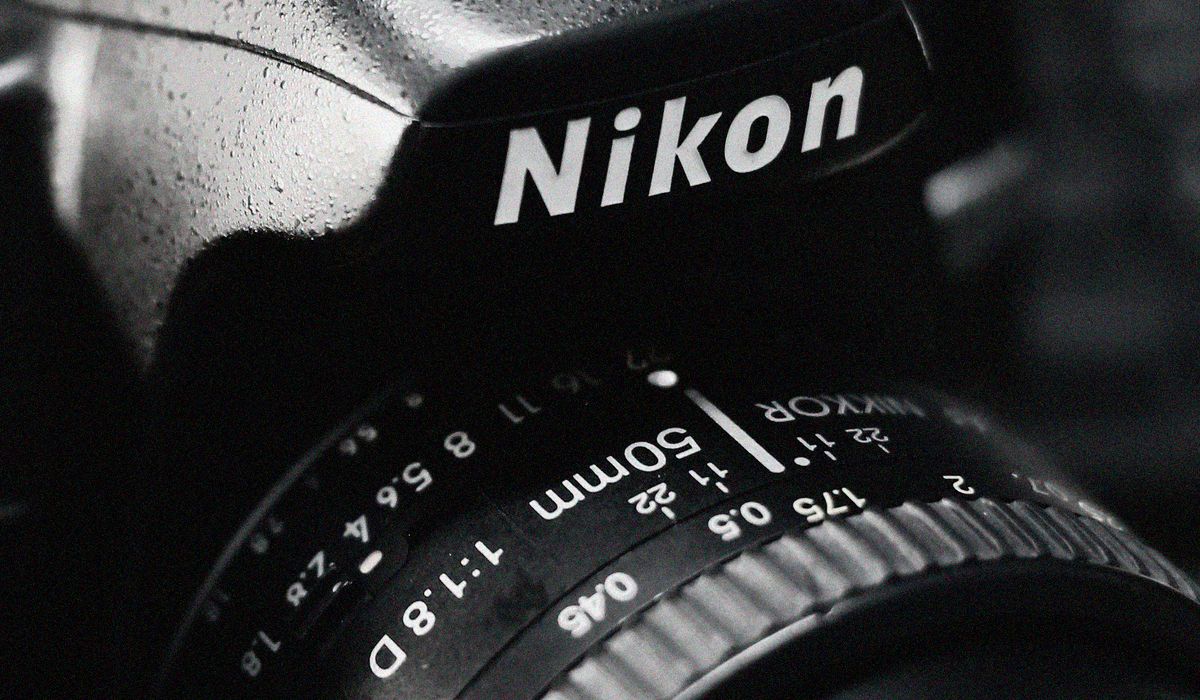
Why aperture is your most expressive portrait control
Aperture is the size of the opening inside your lens, expressed as an f-number. In portrait photography, it does two jobs at once. It controls how much light reaches the sensor, and it controls depth of field — the zone of the image that appears sharp. A wide aperture, such as f/1.8, creates a shallow depth of field, so your subject stands out against a softly blurred background. A narrow aperture, such as f/8, keeps more of the scene sharp, which is useful when you want the setting to be part of the story. Understanding this single control gives you far more confidence in natural light, especially in the UK, where the weather can change from bright to overcast in minutes.
How f-numbers behave in practice
The f-number is a fraction, so the smaller the number, the larger the opening. That is why f/1.8 lets in much more light than f/16. On a typical 50mm f/1.8 lens, focusing at two metres at f/1.8 can give you a depth of field of only a few centimetres. At f/4, that same framing becomes much more forgiving. This is why fast lenses are popular for portraits, but also why they can be frustrating until you learn to control them.
- f/1.4 to f/2: very shallow depth of field, ideal for dreamy head-and-shoulders portraits in soft light. Focus must be precise.
- f/2.8 to f/4: a practical sweet spot for one person. Background blur is still strong, but more of the face stays sharp.
- f/5.6 to f/8: better for couples, small groups, or environmental portraits where the location matters.
- f/11 and beyond: rarely needed for people, unless you want the entire scene sharp and you have plenty of light.
The depth of field triangle: aperture, distance and focal length
Aperture alone does not decide background blur. Three things work together: aperture, distance from camera to subject, and distance from subject to background. If you move closer to your subject, depth of field becomes shallower. If your subject stands further from the background, the background becomes softer. A longer focal length, such as 85mm, also compresses the scene and blurs the background more than a 35mm lens at the same aperture. This is why an 85mm lens at f/2.8 can often produce a more flattering portrait than a 35mm lens at f/1.8. Rather than always reaching for the widest aperture, try changing your position or your subject’s position first. You will often get a better result without spending a penny.
Choosing an aperture for the portrait you want
For a classic head-and-shoulders portrait, start at f/2.8 and focus on the eye nearest the camera. If the far eye is soft, stop down to f/4. For an environmental portrait — someone in a favourite park, a canal towpath, or a city square — use f/4 to f/5.6 so the setting remains readable without distracting from the face. For couples, f/4 is usually safe if they are on the same plane. For small groups, f/5.6 helps keep everyone sharp. For larger groups, f/8 is a sensible starting point. Children and moving subjects benefit from f/2.8 to f/4 combined with a faster shutter speed, because a slightly deeper depth of field gives you a better chance of catching sharp eyes mid-laugh. There is no single correct aperture, only the one that matches your intention.
Using aperture confidently in UK natural light
Overcast days are a gift for portrait photographers. The cloud acts as a huge softbox, so you can use f/2.8 without harsh shadows across the face. On brighter days, open shade beside a building or under a tree gives you similar softness. Golden hour — roughly an hour after sunrise and before sunset — offers warm light and gentle contrast, perfect for wider apertures. In strong midday sun, a wide aperture may force a very fast shutter speed, sometimes beyond your camera’s limit. In that case, stop down to f/4 or f/5.6, or move into shade. Always expose for the face: if the background becomes bright, that is often acceptable. Watch your shutter speed too. For portraits, aim for at least 1/250s, and faster for children. If the light is low, raise your ISO rather than sacrificing sharpness. A little noise is better than a blurred expression.
A simple field routine for better portraits
- Set your camera to Aperture Priority and choose f/2.8 for a single subject.
- Focus on the eye nearest the camera, then recompose carefully if needed.
- Take one frame and zoom in on the LCD to check eyelashes and background blur.
- If the background is too busy, open the aperture, move your subject further from it, or change your angle.
- If one eye is sharp and the other is soft at f/1.8, stop down to f/2.8 or f/4.
- For groups, stop down to f/5.6 and check every face before moving on.
Practise in your local park, high street, or nearest stretch of coastline. Try the same portrait at f/1.8, f/2.8, f/4 and f/5.6, then compare the results on a larger screen. You will quickly develop a feel for which aperture suits your style. The more deliberate you are with this one setting, the more consistent and flattering your portraits will become — whatever the British weather decides to do.


Coding is used in almost all aspects of life and work now, be it directly or indirectly. It’s not just for companies in the tech sector. “An increasing number of businesses rely on computer code,
Coding is used in almost all aspects of life and work now, be it directly or indirectly. It’s not just for companies in the tech sector. “An increasing number of businesses rely on computer code,
Coding is used in almost all aspects of life and work now, be it directly or indirectly. It’s not just for companies in the tech sector. “An increasing number of businesses rely on computer code,