

Movement Is the Pose
The most common reason family portraits look stiff is that someone asked everyone to stand still and smile. Stillness reads as tension. Holding a position feels unnatural, and the result is usually a row of tight shoulders and fixed, glassy grins that nobody wants on the wall.
So build the entire session around movement instead. Ask the family to walk towards you, then past you, then back again. Give them a destination — a gate, a bench, the far end of a path — and let them travel there. You will fire far more frames, and most will be usable, because people in motion rarely produce that frozen "please hurry up" expression.
Set the camera up for it. A shutter speed of 1/500sec or faster freezes a toddler mid-run without visible blur, and an aperture of f/3.5 to f/5.6 gives enough depth of field to keep a scattered family sharp. Continuous autofocus with subject tracking does the rest. If you are shooting on a phone, tap and hold on a face to lock focus, then let them move.
Give Them a Job, Not a Command
"Smile" is a command, and commands produce performance. A job produces genuine expression. Swap instructions for small tasks and watch faces change:
- Walk and talk: "Hold hands and tell each other the best thing that happened this week."
- Whisper a secret: have one child whisper something to a parent, then photograph the parent's reaction rather than the child's.
- The countdown: "On three, everyone run towards me." Shoot the anticipation on two, not the arrival.
- The lift: ask parents to swing a child between them, counting to three out loud.
- The hunt: send younger children to find the biggest leaf, the shiniest conker, or the fluffiest dog in the park.
Rotate jobs every two or three minutes. Attention spans outdoors are short, and a new game resets the mood faster than any amount of coaxing.
Talk to the Adults, Shoot the Children
Nervous parents are the biggest obstacle to a relaxed portrait. They glance at the lens, they straighten jumpers, they apologise for the baby. Your job is to keep them occupied elsewhere.
Ask them questions while you shoot: what the children were like as babies, where they went on their first holiday, who is the worst driver in the family. Keep your eye at the viewfinder and keep firing. The moment a parent stops performing for the camera and starts answering a question, their shoulders drop and their hands find something natural to do. That is the frame you want.
Children are easier. Ignore them slightly, and they will come to you. Photograph them over a parent's shoulder, from behind while they run, or mid-sentence when they have forgotten you are there at all.
Work With British Light and Weather
An overcast day is a gift, not a disappointment. Cloud cover acts as an enormous softbox: skin tones stay even, nobody squints, and you can shoot in almost any direction. Take advantage of it instead of waiting for sunshine.
When the sun does appear, work either side of it. Backlight — placing the sun behind the family — gives lovely rim light on hair, especially in the last two hours before sunset. In a UK summer that can mean shooting from 7pm to 9pm, so plan sessions later than you think.
For open shade, position the family with their backs to a hedge, wall or tree line and their faces turned out towards the brighter sky. Avoid dappled light under trees; the blotches it puts on faces are almost impossible to fix.
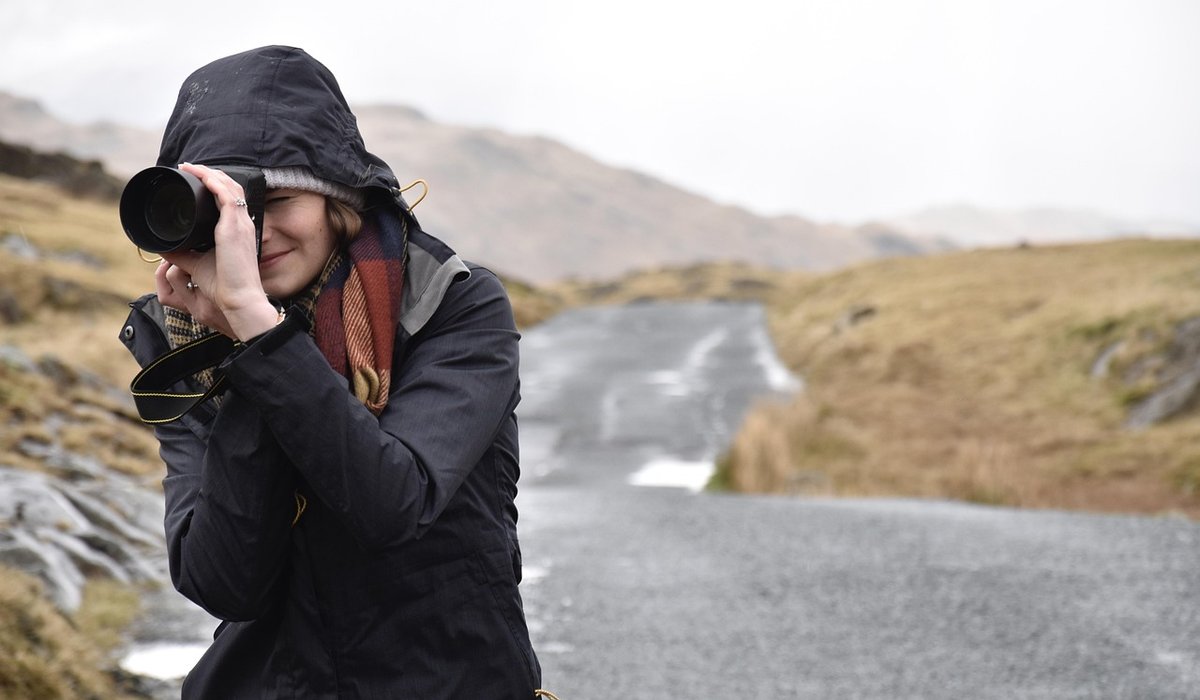
If it rains, lean in. Wellies, an umbrella held low, children jumping in puddles and hoods pulled up often make warmer, more honest pictures than anything shot in perfect weather. Protect your gear, not your plans.
Handling Reluctant Subjects and Mixed Ages
- Toddlers: do not pose them at all. Follow them, crouch to their eye level and shoot while they explore. Two good frames in twenty minutes is a realistic and worthwhile return.
- Teenagers: give them a genuine job. Ask them to hold the reflector, carry the bag, or choose the next location. Ownership beats encouragement every time.
- Grandparents: seat them first and build the family around them. Sitting gives older subjects somewhere to put their hands and takes pressure off knees and backs.
- Dogs: bring treats, keep the lead on but tuck it behind a leg, and shoot before the animal gets bored.
Small Adjustments That Fix Stiffness
A few quiet tweaks can rescue an otherwise awkward frame without anyone feeling directed:
- Chins: ask people to push their forehead slightly towards the camera rather than lifting their chin. It tightens the jawline and removes the double-chin angle.
- Hands: give them something to hold — a child, a coat, a cup of tea, each other's fingers.
- Heights: never line everyone up at the same level. Mix standing, sitting on a bench, kneeling and being carried.
- Distance: step back and let the family fill only part of the frame. The park or garden around them is part of the memory.
- Silence: put the camera down for thirty seconds and chat. It resets the tension faster than any posing tip.
Above all, keep talking, keep moving and keep shooting. The relaxed family portrait is rarely the one you planned — it is the one that happens between the plans.


Coding is used in almost all aspects of life and work now, be it directly or indirectly. It’s not just for companies in the tech sector. “An increasing number of businesses rely on computer code,
Coding is used in almost all aspects of life and work now, be it directly or indirectly. It’s not just for companies in the tech sector. “An increasing number of businesses rely on computer code,
Coding is used in almost all aspects of life and work now, be it directly or indirectly. It’s not just for companies in the tech sector. “An increasing number of businesses rely on computer code,